
The Noida International Airport (NIA), being developed as a greenfield aviation hub in Jewar, Gautam Buddh Nagar, is on track to begin operations by the end of this year.
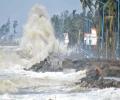
Cyclone Ditwah is moving towards the Tamil Nadu coast, bringing the threat of heavy rainfall. The state government is reviewing preparedness measures, and a red alert has been issued for southern and delta districts.

The rain ebbed in some places in north India and pelted down in others on Tuesday, with at least seven more people dead and hundreds stranded as raging waters gushed through villages, towns and fields -- from the desert state of Rajasthan to the hills of Himachal Pradesh.

"The season averaged maximum temperatures in Himachal Pradesh, West Rajasthan, Konkan, Goa, Coastal Karnataka, Kerala and Arunachal Pradesh are likely to be higher than normal by 0.5-1.0 degree Celsius," the Met department has said in its forecast.

The cold wave continues to disrupt normal life across North India and the death toll due to the extreme harsh weather is now reported to be over 443.

Dense to very dense fog engulfed the Indo-Gangetic plains, including Delhi, for the second morning on the trot on Tuesday, lowering visibility to 50 metres in the city and affecting road traffic and train movement.
The cold wave sweeping north India continued to disrupt normal life for the sixth consecutive day on Thursday and the death toll due to the extreme harsh weather is now reported to be over 195. Approximately 31 more deaths were reported from the various districts in Uttar Pradesh with Agra recording a temperature of 5.4 degree Celsius, the coldest in the state.Seven more deaths were reported from Bihar taking the death toll in the state to 21.

Among the fatalities recorded on Friday, the maximum 17 were from Uttar Pradesh, 14 from Bihar, five from Odisha and four from Jharkhand, where officials said more than 1,300 people are hospitalised with heatstroke conditions.

IMD data shows in the 24 hours between September 1 and 2, Haryana received 806 per cent more rainfall than normal, Punjab 759 per cent, Himachal Pradesh 510 per cent, Delhi 740 per cent, Chandigarh a staggering 1,638 per cent, and Rajasthan 193 per cent.
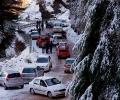
The high hills of Himachal Pradesh received snowfall leaving tourists delighted.
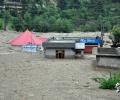
As the weather improved in parts of north India, which was pummelled by heavy rains for days, authorities on Wednesday worked on a war footing to rescue stranded tourists, restore vehicular traffic on arterial roads and prevent floodwaters from entering new areas.

Cyclone Shakhti, the first cyclonic storm of the post-monsoon season in the Arabian Sea, has intensified.

Operations at the Delhi airport remained normal. However, three flights were returned or diverted to the Delhi airport due to bad weather in Chandigarh, Varanasi and Lucknow on Tuesday night.

Delhi is likely to record its second-coldest December since 1901 as temperatures are predicted to drop further.

President Droupadi Murmu has given her assent to the Viksit Bharat Guarantee for Rozgar and Ajeevika Mission (Gramin) Bill, which aims to replace MGNREGA and guarantee 125 days of wage employment per rural household.

"Montha over westcentral Bay of Bengal moved north-northwestwards with a speed of 17 kmph during the past six hours and lay centred at 2.30 am on October 28 over the same region about 230 km south-southeast of Machilipatnam (and) 310 km south-southeast of Kakinada," said the Met Department in a release.

Returning to the Brahmaputra for Vijay Diwas was not just a journey across geography, but across memory of war, service, sacrifice, and the enduring bond between the Indian Air Force and the north east, asserts Air Commodore Nitin Sathe (retd).

A bench of Chief Justice Devendra Kumar Upadhyaya and Justice Tushar Rao Gedela also asked how could other airlines take advantage of the crisis situation and charge hefty sums for tickets from the passengers.

The India Meteorological Department (IMD) has issued a 'red alert', warning of extremely heavy rainfall in Mumbai, Thane, Raigad and Palghar districts on Sunday, extending the wet patch in the region.
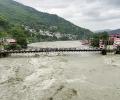
Incessant rains unleashed more death and destruction on Monday in parts of north India, with 37 people killed in landslides and other rain-related incidents in the last two days even as the Army and NDRF teams stepped in to intensify the relief and rescue operations.
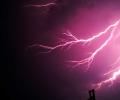
Lightning claims more lives in India annually than any other extreme weather event. Between April and July this year alone, 1,621 people died due to lightning strikes.

Heatwave may abate over most parts of North India in next two days; temperatures likely to drop by 2-3C.
.jpg)
An El Nino is a temporary change in the climate of the Pacific Ocean, in the region around the equator.

The first cloud-seeding trial has been conducted in parts of Delhi, including Burari and Karol Bagh areas, aimed at inducing artificial rain to tackle air pollution.

In Rajasthan, 13 deaths related to rain and storm were reported over the last two days while at least 12 people were killed due to lightning strikes in Jharkhand during the same period, officials said.
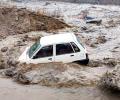
The India Meteorological Department (IMD) forecasts above-normal rainfall for India in September, following a monsoon season marked by heavy downpours and related disasters in various regions. The forecast indicates normal to above-normal rainfall for most areas, with some exceptions in the northeast, east, extreme south peninsular India, and parts of northwest India.

Around 29 trains have been delayed by two to five hours due to foggy weather, a railway official said.

The IMD has red and orange alerts for the hours ahead.

In a post on X in the morning, IndiGo said there was heavy downpour over Delhi, causing some temporary disruption to flight schedules.

'The natural barrier that is Aravalli, you are demolishing it, then who will stop the desert?' 'In future, I predict that people will roam around with oxygen cylinders in Delhi because they won't be able to breathe.'

Study abroad experts explain how Canada, Australia, Germany, France and Dubai are redefining global education.

As many as 38 flights, including 23 domestic and nine international, were diverted from the Delhi airport to nearby cities between 6-8.45 pm.
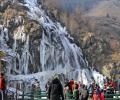
A cold wave has gripped many parts of north and east India, with Srinagar recording a minimum temperature of minus 5.3 degrees Celsius. Other areas experiencing below-freezing temperatures include Gulmarg, Pahalgam, Konibal, Qazigund, Kupwara, and Kokernag in Kashmir. Himachal Pradesh has issued an orange warning for severe cold wave conditions in several districts. Delhi recorded a minimum temperature of 5.9 degrees Celsius, while Faridkot in Punjab was the coldest in the region at 0 degrees Celsius. Extreme cold conditions also continued in parts of Rajasthan and Jharkhand. The Met office has forecast mainly dry weather until December 26, with the possibility of light snowfall in the higher reaches of Kashmir on the intervening night of December 21-22.

'What we are witnessing is not a freak incidence or a freak occurrence, but a new climate reality where warming oceans, monsoon variability and local geography are combining to produce extreme events.'

Notably, Siachen is the highest battlefield of the world, which sits on the nuclear tri-junction of India, Pakistan and China.

Several flights and trains were delayed on Tuesday as the entire North India reeled under a dense blanket of fog.

Destinations like Coorg, Munnar, the Western Ghats, and parts of the North East, are at their scenic best in the monsoon.

The India Meteorological Department (IMD) predicted that cold wave to severe cold wave conditions are very likely to continue in northwest India over the next three days and abate thereafter.

China's ruling Communist Party is holding its annual leadership conclave to discuss the new five-year plan, the impact of US President Donald Trump's tariff war, and the ongoing anti-corruption crackdown in the military.

Light to heavy rains lashed several parts of north India intensifying cold wave conditions in the region following snowfall in higher reaches that brought down day temperature considerably in Delhi and neighbourhood.
